Manufacturing & RFQ
UI/UX Design
SEO & Growth
Feb 13, 2026
The Rise of No-Code Manufacturing Apps in American Factories: A 2026 Guide
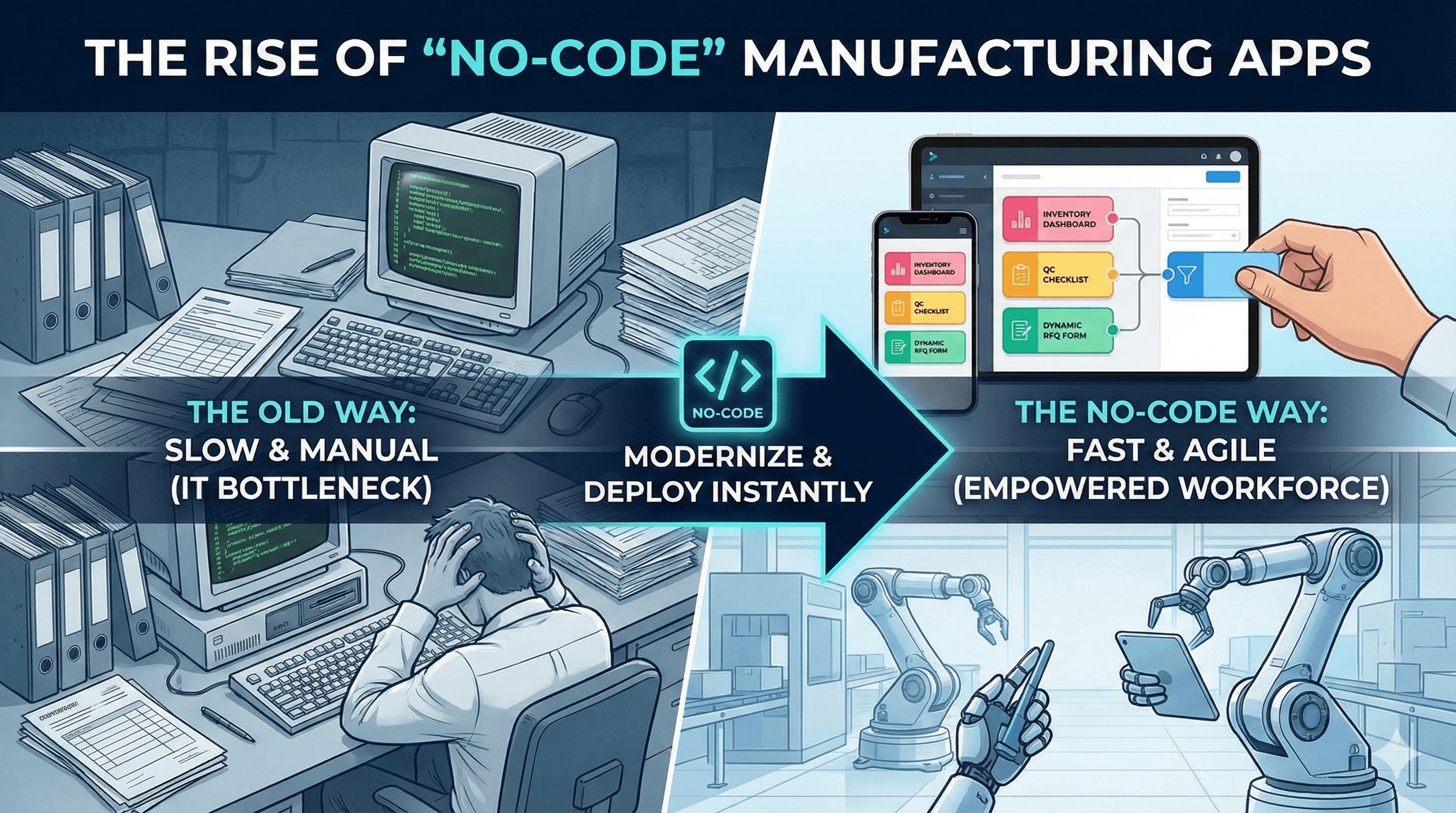
"No-Code" platforms are revolutionizing manufacturing ui ux design by allowing factories to build custom digital tools—like client portals, inventory dashboards, and dynamic rfq forms—without writing traditional code. For US manufacturers, this means faster deployment, lower costs, and the ability to adapt their industrial b2b website to market changes instantly.
The Problem: The "IT Bottleneck"
Historically, if a Plant Manager wanted to update their b2b manufacturing web design or create a simple app for tracking scrap on the shop floor, they had to wait months for the IT department or pay an expensive agency $50k.
In 2026, speed is the primary competitive advantage. If your website design and seo for industrial manufacturing sales service industries usa is static and hard to update, you are losing ground to agile competitors.
Why "No-Code" is Winning the US Market
The "No-Code" movement (using visual development platforms like Webflow, Bubble, or Microsoft Power Apps) is bridging the gap between operations and digital presence.
1. Agile Marketing for Niche Verticals
Instead of one giant, generic website, manufacturers are using no-code tools to spin up highly specific landing pages.
Example: A fabrication shop creates a dedicated micro-site for steel and metalwork industry seo services services.
Result: They dominate the search results for that specific niche because the content is hyper-relevant, not diluted.
2. The Evolution of the "RFQ"
The static "Contact Us" form is dead. Modern no-code tools allow for dynamic rfq engines.
Smart Logic: If a user selects "CNC Machining," the form automatically asks for "Tolerance" and "Material." If they select "3D Printing," it asks for "Layer Height."
Instant Gratification: These forms can instantly calculate rough estimates, significantly improving the user experience and increasing conversion rates.
3. Internal Tools: The Hidden UX Revolution
Manufacturing user interface design isn't just for customers. It's for your workers. Factories are using no-code platforms to build iPad apps for operators.
Use Case: A "Digital Traveler" app where operators scan a QR code to see part instructions.
Benefit: Replaces paper binders, reduces errors, and links directly to the company's central database.
The Role of Professional Design (Don't DIY the UX)
Just because you can build it yourself doesn't mean you should ignore design principles. A b2b ux agentur (UX agency) is still critical for defining the workflow.
The "No-Code" Trap:
Bad UX: Putting every possible button on one screen because it's "easy" to add them.
Good UX: Designing a clean, intuitive interface that guides the user (whether a buyer or an operator) to their goal.
Even with no-code, the fundamentals of manufacturing website redesign apply:
Visual Hierarchy: Make the most important data big and bold.
Mobile First: Ensure the tool works on a rugged tablet or a smartphone.
Speed: Optimize images and databases so the app loads instantly on factory Wi-Fi.
Case Study: From Static to Dynamic
Consider a mid-sized industrielösung webdesign (industrial solution) provider.
Before: A 5-page brochure site. Updates took 2 weeks.
After No-Code: A dynamic portal where clients can log in, view their order status, download certifications, and re-order parts.
ROI: Customer service calls dropped by 40% because clients could serve themselves.
Checklist: Is No-Code Right for You?
Do you need to launch a new product page in under a week?
Is your current industrial b2b website held hostage by a legacy CMS?
Do you have internal processes (like safety audits) that are still on paper?
Do you want to A/B test different manufacturing user interface design layouts to see which one converts better?
The Bottom Line
The factories winning in 2026 aren't just building better parts; they are building better digital experiences.
Adopting a no-code strategy for your manufacturing ui ux design allows you to move at the speed of the market. It turns your website from a digital billboard into a functional piece of your manufacturing machinery.